torstai 28. huhtikuuta 2016

Memo 9

1. What does a creative process consist of?

basic four stages, according to Kaufman:

Stage 1: Preparation
You might think creativity starts with an idea, but the truth is that ideas don't arise in an intellectual vacuum. If you want your brain to come up with innovative notions, you need to feed it materials to work with. This essential but under-celebrated stage of the process is simply called preparation and involves trying to learn lots of things. At this point, rather than searching for magic leaps of understanding, your brain is using attention, reasoning, and planning to gather information.

Stage 2: Incubation
"Then there is this important stage where you let it go," Kaufman explains, stressing that "it's really important." This stage is the one where you might actually want to climb into the bathtub or go for a walk and stop consciously thinking about the problem you're trying to solve. Research shows that letting your mind wander in this way leads to greater creativity.

Stage 3: Illumination
This is the scientific name for that classic "eureka!" moment when "connections automatically, subconsciously collide and then reach the threshold of consciousness," says Kaufman's words. "You're like 'oh my God! That's the idea!'"

Stage 4: Verification
Laypeople may understand creativity as pretty much ending with the thrilling light-bulb moment of the illumination stage, but Kaufman insists that at that point "you're not done." For creativity to reach others and accomplish anything, you need to once again use those critical thinking skills to think about your audience and craft your message or idea. "Some of the greatest creative ideas of all time can easily be lost because they're not packaged in the right way or consumable," Kaufman warns.

http://www.inc.com/jessica-stillman/the-4-stages-of-creativity.html


2. How to generate appealing messages for the target audience?

5 Steps to Creating Your Marketing Message

STEP 1 – Identify your target market.
The first step starts out by asking, “Who is my target market?” Once you have narrowed this down then it’s easier to craft a message to that market.

Every successful business has a target market whether they know it or not. Even the local dry cleaner has a target market, which is probably all the professional people living within a five mile radius of their store.

STEP 2 – Identify the problems that your target market experiences.
The second step starts by asking, “What problems do my target market have and how does it make them feel?”
Each market experiences its frustrations and pains. The secret to crafting a marketing message that will make your market sit up and listen is to identify their problem and the pain and suffering they feel as a result of that problem.

Remember the old saying that goes, “People don’t care about you, until they know you care.” Identifying your market’s pain and suffering tells them that you understand and empathize with them.

STEP 3 – Present your solution to your market’s problem.
The third step starts by asking, “What is the solution that I have to offer my prospect?

Present your solution as a simple cure for all the pain and suffering your market is feeling as a result of their problem. This step is important in that most people won’t lift a finger unless they feel an urgent excruciating pain.

Now, identify all the benefits of your solution and how those benefits will improve the life of your prospect and take away all their pain and anguish.

STEP 4 – Present the results you’ve produced for other people in the same situation.
The fourth step starts by asking, “What are the results that my solution has produced?”

It’s not enough just to tell people you have a solution; you have to prove to them that your solution works. And you can talk all day about how you solved this and that problem, but people are skeptical and don’t automatically believe you.

People will believe other people who are similar to them that have achieved positive results. In this step you’ll need to prove your results by giving testimonials from current and former customers and provide case studies of actual problems that were solved and the results that were achieved.

STEP 5 – Explain what makes you different from your competitors.
The fifth step starts by asking, “How am I different from my competitors?”

You need to communicate your differences!

Prospects are looking for you to communicate your differences. And those differences need to have perceived value to the prospect. It needs to be something they care about.

The Big Marketing Message Mistake
The biggest marketing message mistake that companies make is communicating “What-We-Do” instead of “What’s-In-It-For-Me.” If these were two radio channels (i.e. WWD vs. WIIFM), which one do you think your prospect would rather hear?

While you are transmitting on WWD, your prospect is looking for the WIIFM station. In order for your message to match your market you need to be broadcasting on WIIFM.

http://www.businessknowhow.com/marketing/mktgformula.htm

3. Case examples

Domino's example.

keskiviikko 6. huhtikuuta 2016

Memo 7

1. How to make a social media plan?

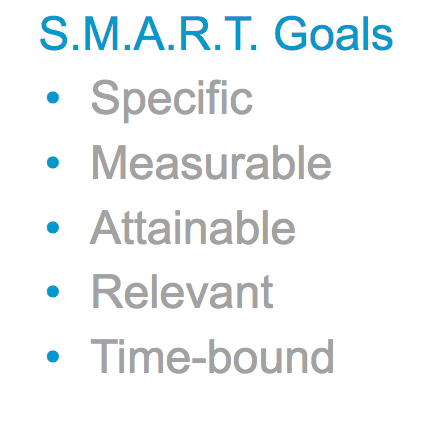
Step 1: Create social media objectives and goals


Step 2: Conduct a social media audit

Things you need to know before making your social media plan
  • need to assess your current social media use and how it is working for you. 
  • requires figuring out who is currently connecting to you via social media, 
  • which social media sites your target market uses 
  • how your social media presence compares to your competitors’
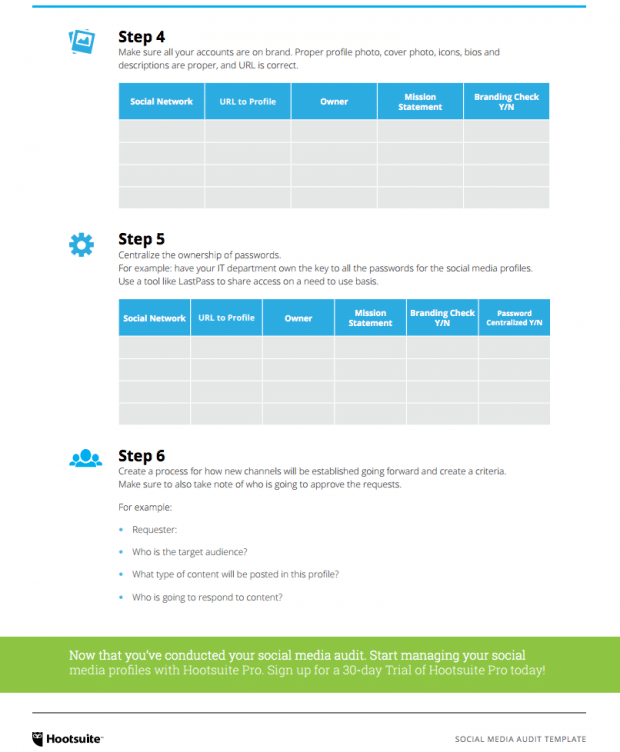
Social Media Audit Template 1
Social Media Audit Template 2


Step 3: Create or improve your social accounts 

Choose what networks best meet your social media goals. If you don’t already have social media profiles on each network you focus on, build them from the ground up with your broader goals and audience in mind. If you do have existing accounts, it’s time to refine them and update them for your best possible results.

Step 4: Get social media inspiration from industry leaders, competitors, clients

Turn to your competitors for inspiration when it comes to what content types and information get the most social media engagement. Also, use social media listening to see how you could distinguish yourself from competitors and appeal to consumers they might be missing. 

Step 5: Create a content plan and editorial calendar


Step 6: Test, evaluate and adjust your social media marketing plan 

2. How to implement a social media plan? 

  • set goals
  • research
  • design the experience
  • how to measure it


3. How to measure a social media plan?
  • quantify your social media listening
  • create a rating for your social media engagement
  • add tons of value and then sell and measure

sunnuntai 13. maaliskuuta 2016

Memo 6

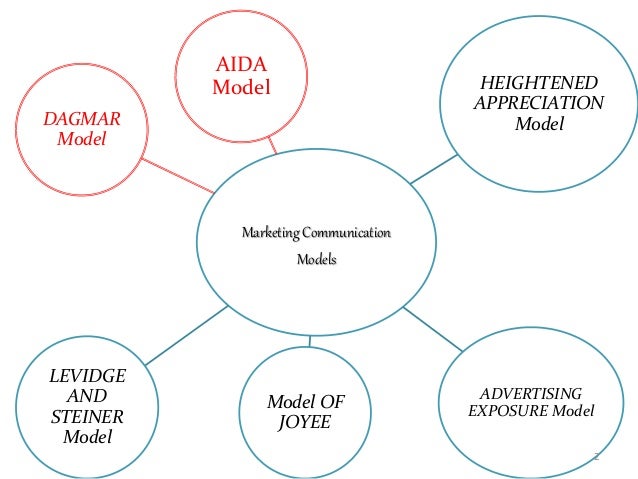
1)    What kind of different Market Communication Models exist?
AIDA model St. Lewis 1900:
1) ATTENTION: To get the attention of the target customer.
2) INTEREST: To create interest in the product by giving product information(or special features) and how it can help satisfy the needs and wants of the individual.
3) OUTCOME: Whether the potential buyer develops a favourable or unfavourable opinionabout the product.
4) DESIRE: Create a desire in the customer to possess the product.This is done by emphasizing the benefits of the product and how it will satisfy the needs and wants.
5) ACTION: Demand action from the customer i.e. convince them to make a purchase.A simple method to get action from the customer is to provide a toll free number or contact person for more information.
6) SATISFACTION: The customer is satisfied after the purchase.

DAGMAR model, Defining Advertising Goals for Measured Advertising Results',was proposed by Russell H.Coney in 1961.
1) AWARENESS:- In this stage the customer becomes aware of the product.
2) COMPREHENSION:- The customer is aware of the product characteristics and its uses.He is also familiar with the brand name and brand logo.
3) CONVICTION:-This stage refers to the emotional decision of preffering one brand to anothers.
4) ACTION:- In this stage the purchase is made.
The DAGMAR model assumes a high-involvment "learn-feel-do" hierarchy.As advertising and marketing goals are deemed distinct,advertising goals can be defined specifically tracked and measured.The long-term effects of the advertisement can also be studied.With the help of the DAGMAR model,the effectiveness of the advertisement can be measured in terms of its ability to move the customer along the hierarchy.The model enabled marketers to define the target market or audience for the commercial.
As the advertisement had to be based on the objectives,creative people involved in the process of designing tend to feel that their creativity was being stifled.The implementation of DAGMAR is also very costly,as extensive research is required for setting quantitative targets and measuring them.

(http://marketingcommunicationmodels.blogspot.fi/)
2)    When and Why to choose each Model? How it can impact different company sizes?
Using the AIDA model will help you ensure that any kind of writing, whose purpose is to get the reader to do something, is as effective as possible. First it must grab the target audience's attention, and engage their interest. Then it must build a desire for the product offering, before setting out how to take the action that the writer wants the audience to take.
AIDA is a theory which is used to sell a product or service.
DAGMAR is a tool which is useful to business when trying to build awareness of the products on offer. 


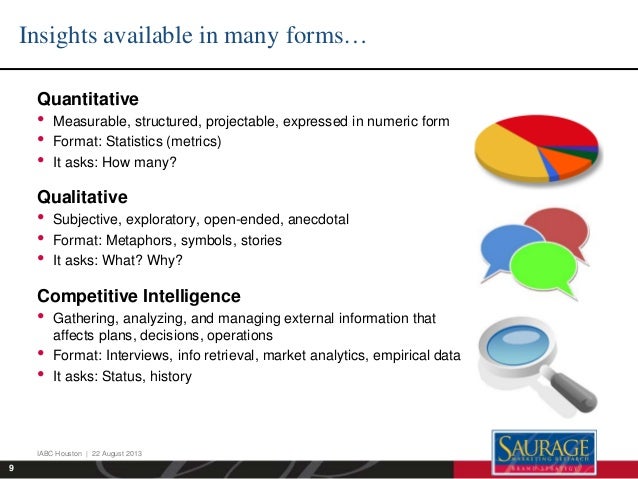
3)    How to measure marketing communications outcome?
9
IABC Houston | 22 August 2013
9
Insights available in many forms…
Quantitative
• Measurable, structured, projectable, ex...

10
IABC Houston | 22 August 2013
10
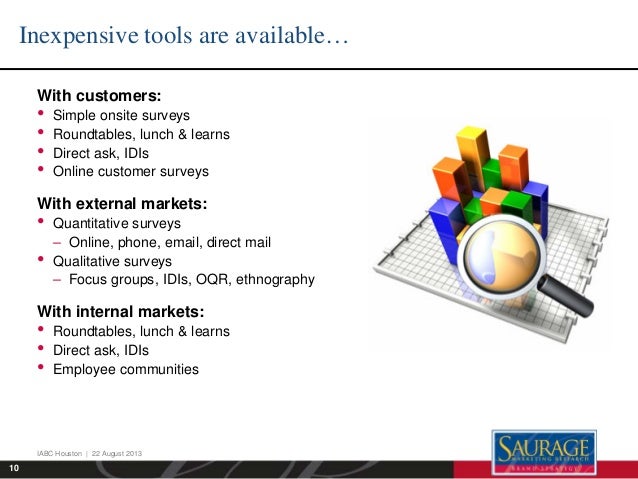
Inexpensive tools are available…
With customers:
• Simple onsite surveys
• Roundtables...

12
IABC Houston | 22 August 2013
12
Metrics for Successful Marketing
• Revenue Metrics: Marketing’s aggregate impact on
co...

sunnuntai 6. maaliskuuta 2016

Memo 5

1.    What are different brand architecture strategies?

All of the brand architecture strategies falls into two approaches: a branded house or a house of brands. When it comes to house of brands, the company name hasn’t been identified at all, instead product names drive purchases. Opposite to this in a branded house strategy there is one unique brand name that motivates purchases and offers value. Organizations usually tend to use a hybrid or a variation of one of the two approaches.

In here I am going to now present four common brand architecture strategy examples:
product_brand
·         Corporate brand hidden
·         One name assigned to one product along with single positioning
·         Each new product is a new brand
endorser_brand
·         Company name well-known and guarantees quality
·         One name assigned to one product along with a single positioning
·         Each product is a new brand
masterbrand
·         One unified name known to consumers
·         Brand name covers more than one category
·         Products align with the brand position of corporate name and normally don’t have their own brand names
source_brand
·         Company name well-known and guarantees quality
·         Company name takes a backseat position
·         Products are the heroes

Source: http://ervinandsmith.com/blog/branding/four-brand-architecture-examples/


2.    When and why to use different brand architecture models? Theory

Leaders usually think about brand architecture only during the times of mergers, acquisitions, rebrands and product launch. At these times understanding the relationship between the brand names that are in your company’s portfolio is essential. But nevertheless you should still document and guide your brand architecture strategy outside of times of change. This can help you to maintain long-term brand consistency, unite stakeholders and also expand your market share successfully by helping you to:
·         Determine how to successfully add new products and services
·         Identify relevant brand positioning, messaging and voice opportunities
·         Reinvigorate or transition lower-impact brands in your portfolio
·         Maintain customer loyalty
·         Uncover new target audience groups


Reasons a company might want to maintain different brands or sub-brands:
·         If there are channel conflict issues, especially if key customers who resell to the end consumer want to offer something different from competitors.
·         If the same (or very similar) products are sold at different price points – separate brands or sub-brands create more distance between the offerings.
·         If one set of products are upscale or premium, while the other are standard or value products.
·         If one brand appeals to a very different market segment with different needs from the other brand (making the messaging different).

The advantage of using fewer brands or a singular brand is marketing efficiency in brand building and customer communication.


3.    Practical examples, no Pepsi or Red Cross

House of Brands Brand Architecture Examples PPT
Endorsed Brands Brand Architecture Examples PPT

lauantai 20. helmikuuta 2016

Memo4

1. How to design and implement visual brand identity?
"Visual identity is a way to represent the brand through critical components: names, logos, typefaces, and colors. An identity system spells out how to present a unified front to others, allowing an individual entity"  (https://umark.wisc.edu/brand/visual-identity-system.php)

The visual brand identity or corporate design can be explained as “the graphic components that all together provide a system for identifying and representing a brand. The basic elements of a brand’s visual identity might comprise distinctive versions of the following” (Clifton et al., 2009, p.113)

  • logotypes
  • symbols
  • colors
  • typefaces

(http://www.diva-portal.org/smash/get/diva2:437222/FULLTEXT01.pdf)


2.How to communicate brand identity through visual elements?
First of all you need the brand concept to be clear for you and others: so that it directly communicates who or what it is? what is it's purpose? and who is the target audience? the logo design should represent these elements.

When designing the visual identity take these key element into consideration:

  • Symbolism
  • Color theory
  • Text content
And ultimately cater to your target audience. Through market research; ascertain their likes, dislikes and what would visually create the strongest response and call to action.
(https://digitalmarketingroom.wordpress.com/2013/03/24/visual-communication-creating-an-effective-brand-identity/)


3. How to take cultural differences into consideration when designing visual brand identity?
When designing the visual brand identity that is going to be international. You have to take in consideration The possible misunderstandings and meanings of the use of words, pictures or colors in different cultures.

perjantai 12. helmikuuta 2016

Memo 3

What is the difference between brand identity and brand image?

 Brand IdentityBrand Image
1Brand identity develops from the source or the company.Brand image is perceived by the receiver or the consumer.
2Brand message is tied together in terms of brand identity.Brand message is untied by the consumer in the form of brand image.
3The general meaning of brand identity is “who you really are?”The general meaning of brand image is “How market perceives you?”
4It’s nature is that it is substance oriented or strategic.It’s nature is that it is appearance oriented or tactical.
5Brand identity symbolizes firms’ reality.Brand image symbolizes perception of consumers
6Brand identity represents “your desire”.Brand image represents “others view”
7It is enduring.It is superficial.
8Identity is looking ahead.Image is looking back.
9Identity is active.Image is passive.
10It signifies “where you want to be”.It signifies “what you have got”.
11It is total promise that a company makes to consumers.It is total consumers’ perception about the brand.
Focus on shaping your brand identity, brand image will follow.
http://www.managementstudyguide.com/identity-vs-image.htm

Compare different brand identity models
According to David Aaker, brand identity has 12 dimensions which are organized around 4 perspectives:
  1. Brand-as-product (product scope, product attributes, quality/value, uses, users, country of origin)
  2. Brand-as-organization (organizational attributes, local versus global)
  3. Brand-as-person (brand personality, brand-customer relationships)
  4. Brand-as-symbol (visual imagery/metaphors and brand heritage).
According to Aaker, Brand identity includes also core and extended identity.
The core identity—the central, timeless essence of the brand—is most likely to remain constant as the brand travels to new markets and products.
The extended identity includes various brand identity elements, organized into cohesive and meaningful groups.
http://marketinglessons.in/2015/03/16/aaker-model-defining-brand-identity/
According to Kapferer Brand identity is formed by six different traits. These six traits are divided in two dimensions:
"1) Constructed source vs. the constructed receiver: a well-presented brand has to be seen as a person (constructed source: physique and personality) and also as the stereotypical user (constructed receiver: reflection and self-image).
2)Externalisation vs. internalisation: a brand has social aspects that define its external expression (externalisation: physique, relationship and reflection) and aspects that are incorporated into the brand itself (internalisation: personality, culture and self-image)." (http://www.slideshare.net/Zeynepkn/kapferer-brand-identity-prism) 
1) Physique –  Physique is the basis of the brand. It may include product features, symbols and attributes.
2) Personality –  Personality defines what personality will the brand assume if it were a person. Personality includes character and attitude.
3) Culture –  Culture takes a holistic view of the organization, its origins and the values it stands for.
4) Relationship –  The strength of the relationship between the brand and the customer. It may represent beliefs and associations in the human world.
5) Reflection –  What does the brand represent in the customers mind or rather the customer mindset as reflected on the brand
6) Self image –  How does the customer see himself when compared to the brand. Example –  A customer might see himself capable or incapable of buying a BMW car.
Pepsi's brand identity prism:
Brand identity prism
http://www.marketing91.com/brand-identity-prism-pepsi/

How do brand identity and brand image affect business?
Brand identity doesn't directly affect the business but it affects the brand image which affects business. Brand identity is about who how company perceives themselves and brand image is how others see your brand. Brand image is directed towards the customers, so if the brand image is bad the business usually won't be doing well.


perjantai 5. helmikuuta 2016

Memo2

1.      What is IMC about and how does it work in practice? Name a few examples.
    • Who is in charge of, what do you coordinate, IMC and how?

IMC stands for integrated marketing communications. This is an approach to achieve the objectives of marketing campaign. This is used by organizations to brand and coordinate their marketing efforts across multiple channels. There is used different promotional methods both traditional and digital media, such as blogs, magazines, television, radio, search engine optimization and so on. 

Because marketing efforts have changed from mass advertising to niche marketing, companies have started using IMC more to develop more cost-effective campaigns that will still deliver consumer value.

"As defined by the American Association of Advertising Agencies, integrated marketing communications " ... recognizes the value of a comprehensive plan that evaluates the strategic roles of a variety of communication disciplines advertising, public relations, personal selling, and sales promotion and combines them to provide clarity, consistency, and maximum communication impact.""


Source: Boundless. “Introduction to Integrated Marketing Communications.” Boundless Marketing. Boundless, 21 Jul. 2015. Retrieved 04 Feb. 2016 from https://www.boundless.com/marketing/textbooks/boundless-marketing-textbook/integrated-marketing-communications-12/introduction-to-integrated-marketing-communications-81/introduction-to-integrated-marketing-communications-403-4061/

Read more: http://www.businessdictionary.com/definition/integrated-marketing-communications-IMC.html#ixzz3zEQp9SzE


2.      How can a company synchronize communication tools/channels to give a consistent message?

DeSantis Breindel's white paper on synchronized marketing, "synchronization goes beyond integration, allowing the voice of the brand to speak to every target, through every relevant discipline at every touch point."
Synchronized marketing's core is based on the brand's voice and message. Integrating your marketing is great; however, synchronized marketing is more than one campaign. It's the overall marketing and branding strategy. It's taking all of your marketing platforms and having them working together simultaneously, with your consumer in mind.
It's no longer just about integrating your marketing efforts; it's about keeping them "in sync" with each other, and more importantly, "in sync" with your overall brand message. Synchronized marketing takes the ideas of integrated marketing communications and expands upon them in a persona-focused approach.
o   Defining brands focus and reinforcing it continuously
o   Staying consistent on various platforms
o   Connecting your various platforms
o   Participating in and encouraging dialogue with your customers
o   using your own content

http://blog.hubspot.com/insiders/synchronized-marketing
3.      What are common mistakes in IMC? Give a few examples.

o Failure to distinguish positioning (what you say) from ad creative (how you say it)
o Mistaken assumptions about consumer knowledge
o Improperly positioned
o Failure to break through the clutter
o Distracting, overpowering creativeness
o Failure to use supporting media
o Changing campaigns too frequently
o Substituting frequency for quality

http://www.slideshare.net/yacikay/integrating-marketing-communication