sunnuntai 13. maaliskuuta 2016

Memo 6

1)    What kind of different Market Communication Models exist?
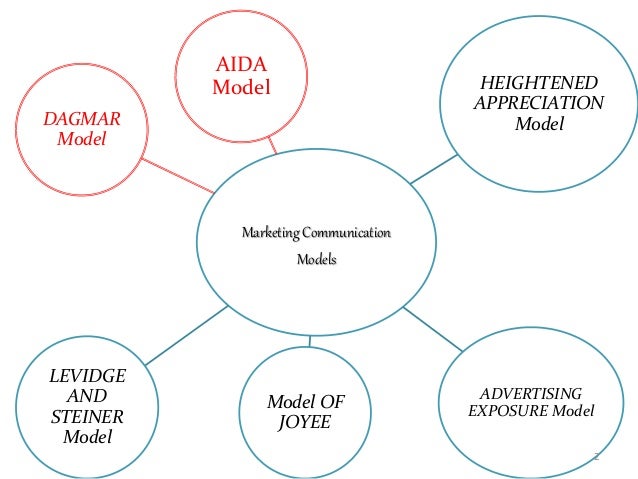
AIDA model St. Lewis 1900:
1) ATTENTION: To get the attention of the target customer.
2) INTEREST: To create interest in the product by giving product information(or special features) and how it can help satisfy the needs and wants of the individual.
3) OUTCOME: Whether the potential buyer develops a favourable or unfavourable opinionabout the product.
4) DESIRE: Create a desire in the customer to possess the product.This is done by emphasizing the benefits of the product and how it will satisfy the needs and wants.
5) ACTION: Demand action from the customer i.e. convince them to make a purchase.A simple method to get action from the customer is to provide a toll free number or contact person for more information.
6) SATISFACTION: The customer is satisfied after the purchase.

DAGMAR model, Defining Advertising Goals for Measured Advertising Results',was proposed by Russell H.Coney in 1961.
1) AWARENESS:- In this stage the customer becomes aware of the product.
2) COMPREHENSION:- The customer is aware of the product characteristics and its uses.He is also familiar with the brand name and brand logo.
3) CONVICTION:-This stage refers to the emotional decision of preffering one brand to anothers.
4) ACTION:- In this stage the purchase is made.
The DAGMAR model assumes a high-involvment "learn-feel-do" hierarchy.As advertising and marketing goals are deemed distinct,advertising goals can be defined specifically tracked and measured.The long-term effects of the advertisement can also be studied.With the help of the DAGMAR model,the effectiveness of the advertisement can be measured in terms of its ability to move the customer along the hierarchy.The model enabled marketers to define the target market or audience for the commercial.
As the advertisement had to be based on the objectives,creative people involved in the process of designing tend to feel that their creativity was being stifled.The implementation of DAGMAR is also very costly,as extensive research is required for setting quantitative targets and measuring them.

(http://marketingcommunicationmodels.blogspot.fi/)
2)    When and Why to choose each Model? How it can impact different company sizes?
Using the AIDA model will help you ensure that any kind of writing, whose purpose is to get the reader to do something, is as effective as possible. First it must grab the target audience's attention, and engage their interest. Then it must build a desire for the product offering, before setting out how to take the action that the writer wants the audience to take.
AIDA is a theory which is used to sell a product or service.
DAGMAR is a tool which is useful to business when trying to build awareness of the products on offer. 


3)    How to measure marketing communications outcome?
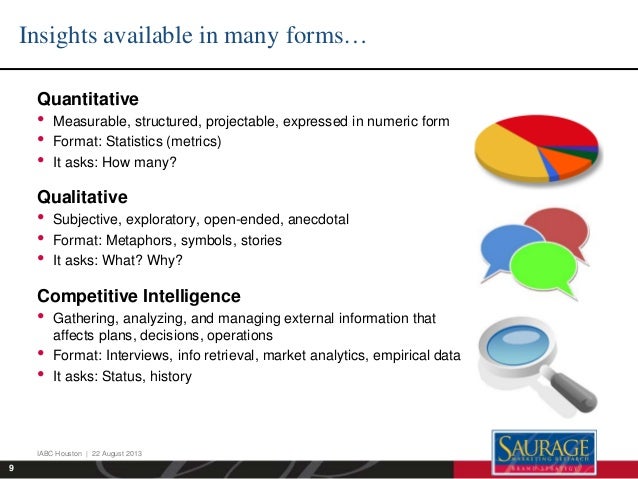
9
IABC Houston | 22 August 2013
9
Insights available in many forms…
Quantitative
• Measurable, structured, projectable, ex...

10
IABC Houston | 22 August 2013
10
Inexpensive tools are available…
With customers:
• Simple onsite surveys
• Roundtables...

12
IABC Houston | 22 August 2013
12
Metrics for Successful Marketing
• Revenue Metrics: Marketing’s aggregate impact on
co...

sunnuntai 6. maaliskuuta 2016

Memo 5

1.    What are different brand architecture strategies?

All of the brand architecture strategies falls into two approaches: a branded house or a house of brands. When it comes to house of brands, the company name hasn’t been identified at all, instead product names drive purchases. Opposite to this in a branded house strategy there is one unique brand name that motivates purchases and offers value. Organizations usually tend to use a hybrid or a variation of one of the two approaches.

In here I am going to now present four common brand architecture strategy examples:
product_brand
·         Corporate brand hidden
·         One name assigned to one product along with single positioning
·         Each new product is a new brand
endorser_brand
·         Company name well-known and guarantees quality
·         One name assigned to one product along with a single positioning
·         Each product is a new brand
masterbrand
·         One unified name known to consumers
·         Brand name covers more than one category
·         Products align with the brand position of corporate name and normally don’t have their own brand names
source_brand
·         Company name well-known and guarantees quality
·         Company name takes a backseat position
·         Products are the heroes

Source: http://ervinandsmith.com/blog/branding/four-brand-architecture-examples/


2.    When and why to use different brand architecture models? Theory

Leaders usually think about brand architecture only during the times of mergers, acquisitions, rebrands and product launch. At these times understanding the relationship between the brand names that are in your company’s portfolio is essential. But nevertheless you should still document and guide your brand architecture strategy outside of times of change. This can help you to maintain long-term brand consistency, unite stakeholders and also expand your market share successfully by helping you to:
·         Determine how to successfully add new products and services
·         Identify relevant brand positioning, messaging and voice opportunities
·         Reinvigorate or transition lower-impact brands in your portfolio
·         Maintain customer loyalty
·         Uncover new target audience groups


Reasons a company might want to maintain different brands or sub-brands:
·         If there are channel conflict issues, especially if key customers who resell to the end consumer want to offer something different from competitors.
·         If the same (or very similar) products are sold at different price points – separate brands or sub-brands create more distance between the offerings.
·         If one set of products are upscale or premium, while the other are standard or value products.
·         If one brand appeals to a very different market segment with different needs from the other brand (making the messaging different).

The advantage of using fewer brands or a singular brand is marketing efficiency in brand building and customer communication.


3.    Practical examples, no Pepsi or Red Cross

House of Brands Brand Architecture Examples PPT
Endorsed Brands Brand Architecture Examples PPT